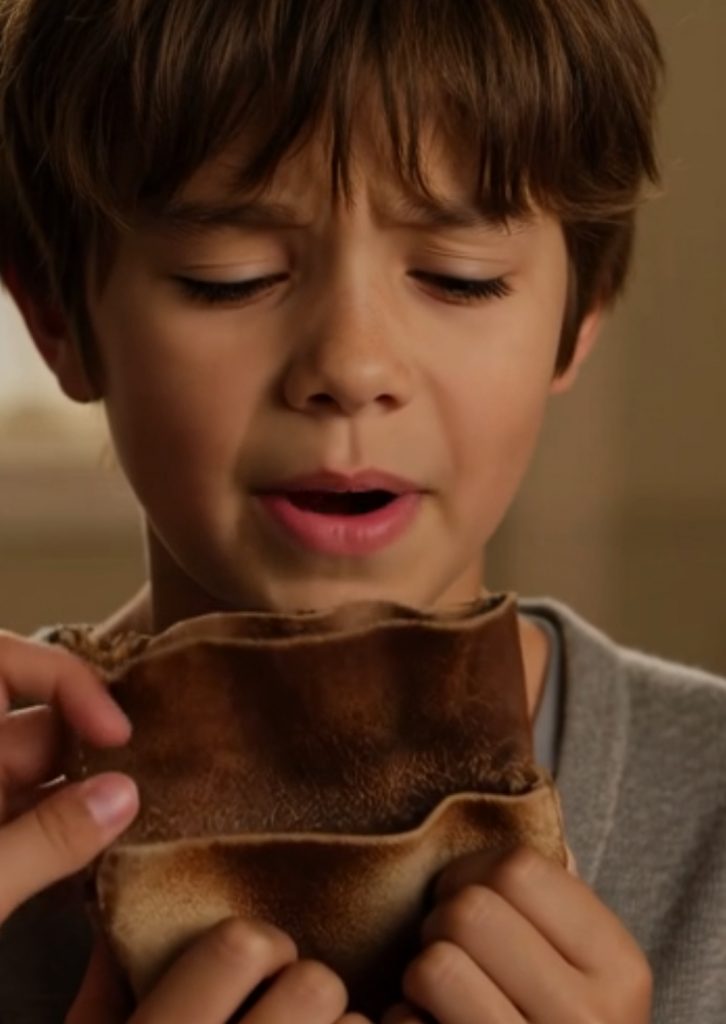
He had been only twenty-seven years old then. A young, vibrant artisan with a streak of white flour smeared across his cheek and an apron dusted with powdered sugar. He possessed the kindest eyes I had ever seen. I had tried to play a game of pretend, walking the aisles, inspecting the glass cases as if I were a discerning customer with money to spend, secretly checking my empty purse just in case a stray dime had miraculously materialized.
Harold hadn’t been fooled. He had known instantly.
“Are you hungry, sweetheart?” he had asked, his voice a low, gentle rumble that carried no judgment.
I had stared at my ruined shoes, my face burning with the suffocating shame of poverty. “A little.”
“How much capital are you working with today?” he had inquired softly.
I had unclasped the velvet purse, holding it upside down. Not a single copper penny fell out. “I’m sorry,” I had whispered, fighting back a wave of humiliating tears. “I shouldn’t have come inside.”
I had turned to run back into the freezing rain, but Harold’s voice stopped me. He didn’t offer me a stale leftover. He didn’t hand me a crumb of charity. Instead, he pulled two massive, steaming loaves of freshly baked bread right out of the glowing oven. He wrapped them meticulously in heavy, yellow butcher paper.
Before he folded the ends shut, he pressed the bakery’s signature stamp—a beautiful blue wheat seal—directly into the paper.
He walked around the counter and knelt down to my eye level, placing the heavy, impossibly warm package into my trembling arms. The heat radiated through my chest, chasing away the cold.
“I can’t pay you,” I had choked out, a single tear escaping and tracking through the dirt on my cheek.
“I am fully aware of that,” Harold had smiled, a warm, genuine expression that etched itself permanently into my soul. “But someday, when you are older, and life finally decides to become a little kinder to you… I want you to pass that kindness to someone else who needs it.”
Before I left his shop, I had desperately searched the pockets of my torn cardigan. I wanted to give him something. Anything. All my tiny, frozen fingers found was a single, broken piece of a blue wax crayon.
I had placed the yellow package on his counter, turned it over, and drew a crooked, imperfect blue heart right next to his wheat seal. Underneath it, in my messy, third-grade handwriting, I scribbled a vow: I will come back one day.
“June?” Elias’s sharp, irritated voice snapped me violently back to the present. “Are we signing this or what? The demolition foreman is texting me. We take possession of the building at noon.”
I blinked, the cold reality of the boardroom rushing back in. I glanced at the digital clock on the wall.
It was 11:15 AM.
If I signed that paper, the man who had kept me from starving to death would be thrown onto the street, his life’s work crushed into gravel.
“Elias,” I said, my voice dropping into a dangerously quiet register as I closed the manila folder. “Where exactly is this demolition foreman right now?”
“He’s parked on Charles Street,” Elias smirked, entirely oblivious to the lethal shift in my demeanor. “I’m heading down there now to personally hand him the eviction notice. Why? Do you want to come watch the brick fall?”
I stood up slowly, grabbing my coat and the foreclosure file. My heart hammered a frantic, violent rhythm against my ribs, but my face remained an impenetrable mask of ice.
“Oh,” I whispered, locking eyes with the junior vice president. “I wouldn’t miss it for the world.”
Chapter 2
The drive to the historic district was an agonizing blur of brake lights and relentless rain.
The gentrification of Baltimore was a ravenous, unstoppable machine, and my firm was the engine driving it. Neighborhoods I had once wandered as a hungry child were now unrecognizable, replaced by sterile glass towers, overpriced coffee boutiques, and soulless luxury apartments.
I pulled my sleek black sedan to the curb on Charles Street, slamming the transmission into park.
The neighborhood had deteriorated, but the bakery remained a stubborn, resilient anchor. The faded blue awning was battered, sagging under the weight of the torrential downpour. Parked illegally on the sidewalk directly in front of the shop was a massive, yellow Caterpillar bulldozer, its diesel engine rumbling aggressively, spewing toxic black exhaust that fought a losing battle against the heavenly, yeast-heavy scent of baking bread.
I stepped out into the rain, my trench coat whipping around my legs, my high heels clicking sharply against the wet pavement.
The brass bell chimed a familiar, melancholy note as I pushed the heavy oak door open.
The interior of the bakery was a war zone. Two burly contractors in neon vests were already unbolting the heavy glass display cases from the floor. And standing in the center of the room, flanked by two armed private security guards, was Elias Thorne.
Behind the worn wooden counter stood Harold Finch.
The breath caught in my throat. He was forty-nine now, but the crushing weight of impending bankruptcy had aged him terribly. His hair, once dark and vibrant, was now heavily threaded with silver. Deep, exhausted lines framed his kind eyes. He was wearing a faded white apron, his forearms dusted with a fine layer of coarse flour.
He didn’t look angry. He looked entirely, utterly defeated.
“Seventy years of baking, Finch,” Elias taunted, his voice dripping with condescension as he paced the floor, his expensive leather shoes squeaking against the linoleum. “Seventy years, and you don’t have a dime in the bank to show for it. You missed three consecutive mortgage payments. Meridian Capital owns this dirt now.”
“Mr. Thorne, please,” Harold’s voice was raspy, broken. He gripped the edge of his counter so tightly his knuckles turned white. “The custom stone ovens… they’ve been in my family for three generations. I have a buyer lined up in New Jersey. Just give me the weekend to extract them. If the bulldozer hits this building, they’ll be crushed.”
“That sounds like a spectacular ‘you’ problem,” Elias laughed, a harsh, ugly sound that echoed in the empty shop. “The real estate alone is worth four million to my developers. We don’t care about your antique brick ovens. The eviction was finalized at midnight. Pack your knives and get out.”
I stood frozen in the shadows of the doorway, the rain dripping from my coat onto the floorboards. The phantom hunger of my childhood clawed at my stomach. I watched the man who had fed me when I had absolutely nothing beg for mercy from a corporate parasite who had never known a day of struggle in his miserable life.
Harold lowered his head, a single, silent tear slipping down his flour-dusted cheek. “I just need forty-eight hours.”
“You don’t have forty-eight seconds,” Elias snapped.
dark, blinding rage—a fury hotter and more violent than anything I had ever experienced in a courtroom—ignited in the very center of my chest.
“Elias,” I said.
My voice wasn’t loud, but it cut through the noise of the rumbling bulldozer outside like a gunshot.
The two contractors stopped unbolting the glass case. The security guards stiffened. Elias whipped around, a smug, arrogant grin spreading across his face as he saw me standing in the doorway.
“Ah, June,” Elias sneered, gesturing toward me with open arms. He turned back to the broken baker. “Look at this, Finch. You’re getting VIP treatment. The Senior Partner of Acquisitions drove all the way down here in the rain just to ensure you are personally thrown onto the street.”
Harold looked up, his exhausted eyes locking onto mine. He didn’t recognize the ruthless, wealthy attorney standing in her designer coat. He only saw the executioner who had come to swing the final axe.
I slowly bent down, picking up the ruined, yellow-wrapped loaf of bread from the dirty floor. I cradled it in my hands, feeling the residual warmth radiating through the paper.
I looked up, locking my gaze entirely on Elias Thorne.
“Call off the bulldozer, Elias,” I ordered, my voice dropping to a freezing, lethal whisper. “And tell your contractors to step away from that display case before I have them arrested for vandalism.”
Chapter 3
Elias Thorne’s arrogant smile faltered for a fraction of a second, his perfectly groomed eyebrows knotting together in genuine confusion.
“Excuse me?” Elias scoffed, letting out a nervous, high-pitched laugh. He took a step toward me, lowering his voice so the contractors wouldn’t hear. “June, what kind of power play is this? We have the green light from the board. The developers are wiring the escrow funds at 1:00 PM. We are clearing this lot.”
I didn’t blink. I didn’t break eye contact. I walked slowly across the bakery floor, my heels clicking a steady, menacing rhythm against the linoleum. I bypassed Elias entirely, stopping directly in front of the worn wooden counter where Harold stood paralyzed.
“You hold a promissory note for this property, Elias,” I stated, keeping my eyes fixed on the baker. “Meridian Capital holds the debt. But Meridian Capital does not own the building yet. The foreclosure requires a final, notarized sign-off from the Senior Partner of the division.”
“Which is you,” Elias hissed, stepping up behind me, his frustration quickly boiling over into anger. “So pull out your pen, sign the damn paper, and let’s get this over with. I am not standing in a flour-covered dump all afternoon.”
I reached into the inner pocket of my trench coat. I didn’t pull out a Montblanc pen. I didn’t pull out the foreclosure authorization.
I pulled out my phone, a heavy, encrypted tablet, and a cashier’s receipt printed on the thick, watermarked paper of the Federal Reserve.
I turned around and slapped the document flat against the glass of the pastry case, right under Elias’s nose.
“I didn’t sign the foreclosure, Elias,” I whispered, the venom in my voice finally bleeding through the ice. “Instead, on my drive over here, I accessed the firm’s internal portal. I utilized my executive bypass authority. And I personally purchased the entire delinquent debt portfolio of this specific address from Meridian Capital.”
The color drained entirely from Elias’s face, leaving him a sickening shade of gray. His eyes darted frantically across the document, reading the astronomical dollar amount, the wire transfer confirmation, and the name of the private LLC that now held the deed.
It was my LLC.
“You… you bought the debt?” Elias stammered, his voice cracking. “Are you insane? You just blew a twenty-million-dollar luxury condo development! The board of directors will have your head! They will strip your partnership by sunset!”
“Let them try,” I countered, stepping directly into his personal space, forcing him to backpedal. “I am the highest-billing attorney in the history of that firm. If they want to wage a war over a single bakery, I will gladly bury them in litigation until they file for Chapter 11.”
I pointed a rigid, unforgiving finger at the front door.
“The debt on this building is officially satisfied in full. Meridian Capital no longer has any jurisdiction here,” I commanded, my voice echoing with absolute, unquestionable authority. “You are trespassing on private property. Take your contractors, take your security guards, and get that smoke-spewing bulldozer off my sidewalk before I dial the police commissioner and have you personally dragged out of here in handcuffs.”
Elias was hyperventilating now. He looked at the legal document, he looked at my face, and he realized with absolute certainty that I was not bluffing. I had just annihilated his career-making deal in less than sixty seconds.
“You are going to regret this, June,” Elias spat, his face flushing a dangerous crimson. He turned to his men, gesturing wildly. “Pack it up! We’re leaving!”
The contractors grabbed their tool belts. The security guards hustled out the front door. Elias threw me one last look of pure, unadulterated hatred before he shoved his way out into the rain, slamming the heavy oak door so violently the brass bell rattled against the glass.